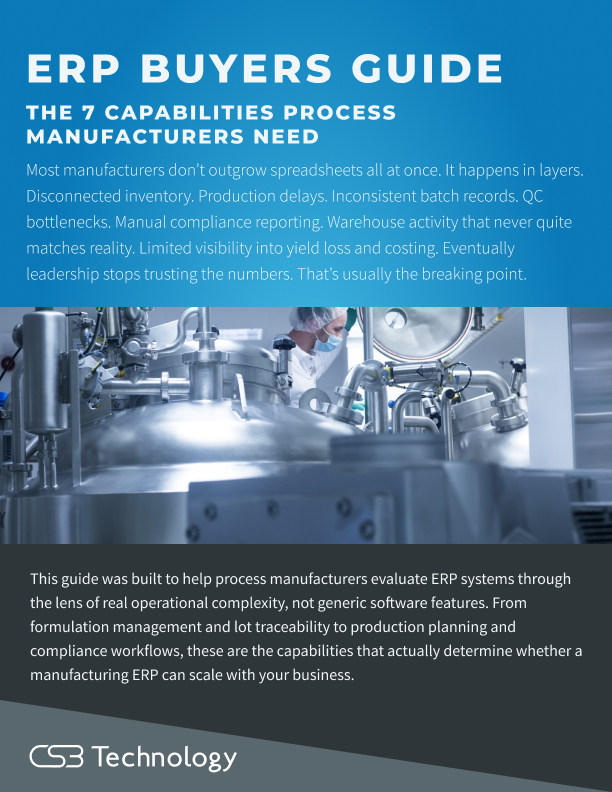
Batch production, formula management, inventory visibility, and traceability all become harder to manage as operations grow. Better operational structure creates better control across the entire production process.
Many process manufacturers reach a point where spreadsheets, manual tracking, and disconnected systems begin slowing operations down instead of supporting growth.
Formula changes become difficult to track. Inventory visibility becomes inconsistent. Production reporting takes too long. Teams spend more time fixing gaps than improving performance.
Common operational challenges include:
Modern ERP systems help process manufacturers connect production, inventory, purchasing, reporting, and operational planning into a single framework.
The goal is not replacing one tool with another. The goal is creating operational clarity that supports consistency, visibility, and long-term growth.
The right structure helps teams:
This practical checklist outlines operational areas process manufacturers should evaluate when reviewing production systems, inventory workflows, and reporting processes.
Whether you are planning for growth, replacing disconnected tools, or improving visibility across operations, this resource provides a strong starting point.
CS3 helps process manufacturers improve operational visibility through structured ERP planning, implementation, and system optimization.
The focus is not generic software sales. The focus is helping organizations reduce operational friction, improve reporting accuracy, and build systems that support long-term scalability.
From batch production workflows to inventory management and reporting structure, the goal is practical improvement that teams can actually sustain.
If production visibility, inventory tracking, or reporting gaps are slowing operations down, start with a practical evaluation of where the process is breaking down.